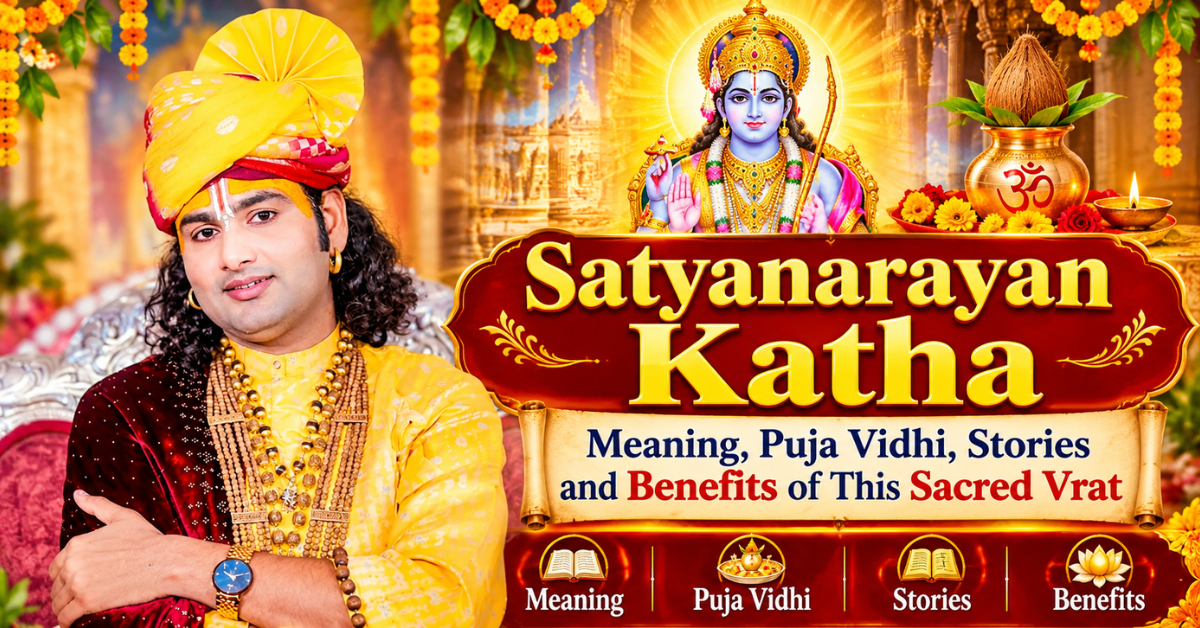
Satyanarayan Katha: Meaning, Puja Vidhi, Stories and Benefits of This Sacred Vrat
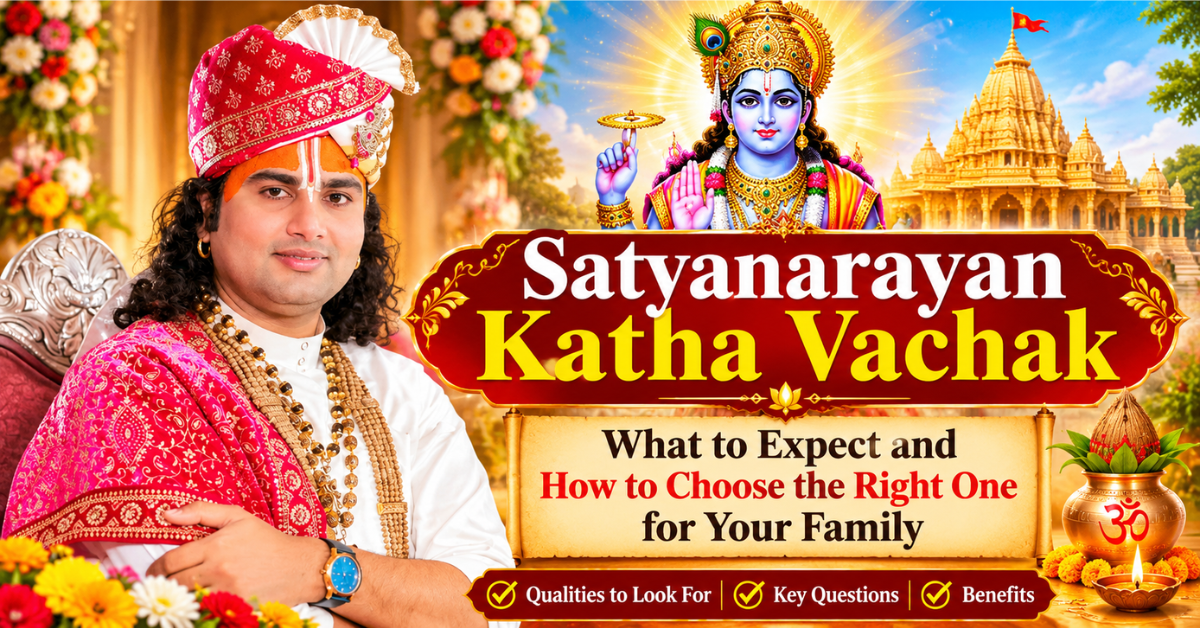
Few rituals feel as warm and welcoming as the Satyanarayan katha . Families hold it to give thanks, to begin something new or simply to bring peace into the house. It needs no elaborate rites. All it asks for is sincerity, a clean space and a heart ready to listen.
This article explains what the vrat means, how to perform the puja step by step, which stories are told and why so many families return to it year after year.
What Is the Satyanarayan Katha?
Satyanarayan is a form of Lord Vishnu, worshipped as the embodiment of truth. The word itself joins satya , meaning truth, with Narayan , a name of Vishnu. The katha is a set of five chapters, traditionally linked to the Skanda Purana. They teach that honesty, faith and keeping one's word bring lasting blessings, while pride and broken promises bring hardship.
The vrat is open to everyone. Families perform it on Purnima, on Thursdays, or on special occasions such as a housewarming, a wedding, a new business or a family milestone.
The Meaning Behind the Vrat
The central message is simple: truth is the foundation of a good life. Each story shows a person who forgot a promise made to the Lord and suffered for it, then regained peace by returning to truth and devotion. The katha does not frighten the listener. It reminds us that gratitude and integrity are worth more than any ritual performed for show.
Satyanarayan Puja Vidhi: Step by Step
The method is easy enough for any household to follow.
Preparation. Clean the home and the puja area. Bathe and wear fresh, simple clothes. Place a low platform with a yellow or red cloth and set the picture or murti of Lord Satyanarayan on it.
Samagri. Keep a kalash with water, mango leaves and a coconut, along with flowers, tulsi leaves, fruits, incense, a lamp, betel leaves and the prasad ingredients.
Sankalp and Ganesh puja. Begin by taking a sankalp, stating the purpose of the puja. Worship Lord Ganesh first, then the kalash and the other deities.
Worship of Satyanarayan. Offer flowers, tulsi, incense and the lamp to the Lord with devotion.
Listening to the katha. Narrate or listen to the five chapters together. If you prefer guidance, a Satyanarayan katha vachak can lead the puja and explain each story.
Aarti and prasad. End with the aarti, offer the prasad and distribute it to everyone present. The traditional prasad is a sweet made from semolina, ghee, sugar and banana, with tulsi leaves added.
The Stories of the Satyanarayan Katha
The five chapters share a pattern of promise, forgetfulness and return to truth.
- The poor Brahmin and the woodcutter. Lord Vishnu appears to a struggling Brahmin and shares the vrat. Those who perform it with faith see their lives improve.
- The merchant Sadhu Vanik. He vows to perform the puja after the birth of his daughter but keeps postponing it. Losses follow until he and his family honour the promise.
- King Ulkamukh. A devout king and his queen perform the vrat with sincerity and are blessed with peace.
- King Tungadhwaj and the shepherds. The king, in his pride, ignores the prasad offered by shepherds and faces trouble. He recovers when he returns with humility.
The lesson is the same each time: never treat a promise to the divine, or to another person, lightly.
Benefits of the Satyanarayan Vrat
Devotees believe the vrat brings:
- Peace at home. The shared ritual and quiet listening calm the household.
- Gratitude. It teaches families to be thankful for what they have.
- Fulfilment of wishes. Many perform it before or after an important milestone.
- Unity. Relatives and neighbours gather, which strengthens bonds.
- Moral grounding. The stories encourage honesty and humility in daily life.
Tips for a Meaningful Katha
Fix the date early and tell guests the timing. Keep the space calm and ask everyone to silence their phones. Share the prasad with all, since leaving someone out goes against the spirit of the vrat. Many families also explore other traditions after this puja, such as a Ram katha or a Hanuman katha , to deepen their devotion.
Conclusion
The Satyanarayan katha is a gentle reminder that truth, gratitude and humility are the real wealth of a home. With a clean space, sincere prayer and an open heart, the ceremony becomes a memory the family carries long after the prasad is eaten. To learn more, visit Aniruddhacharya Ji Maharaj . May Lord Satyanarayan bless your family with truth, peace and abundance.
Share this post:
Continue Your Spiritual Journey
Explore related kathas and pujas for devotion, family occasions, and deeper spiritual practice.