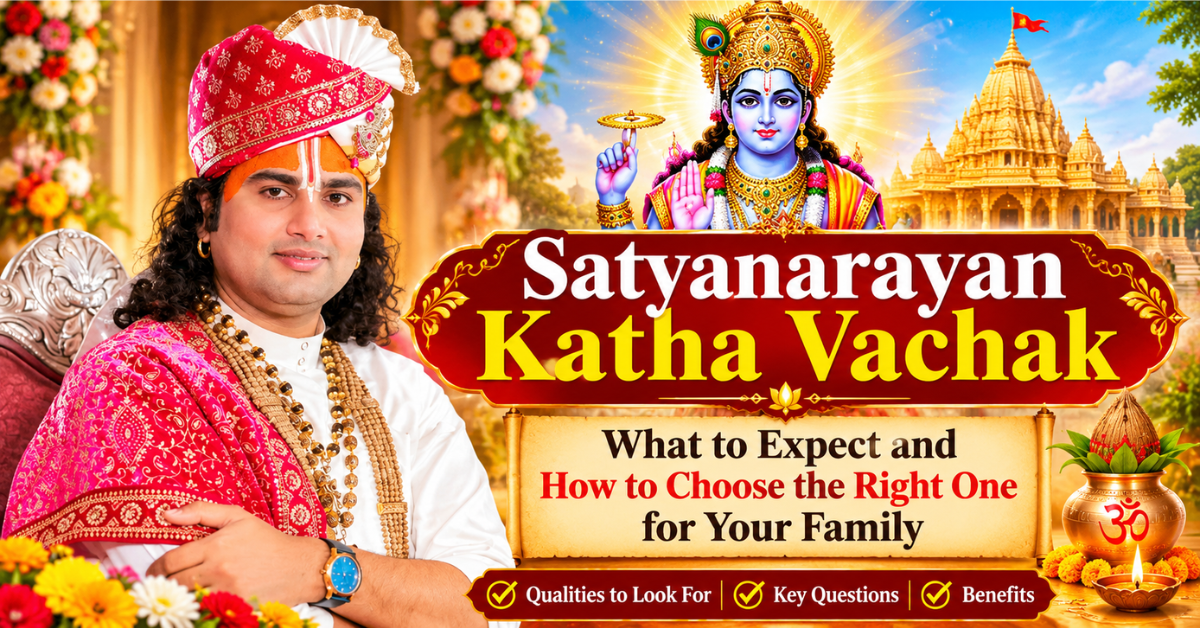
Satyanarayan Katha Vachak: What to Expect and How to Choose the Right One for Your Family
The Satyanarayan puja is one of the most loved ceremonies in Hindu households, and the heart of the ceremony is the katha itself. Who narrates it, and how, shapes the whole experience. A thoughtful Satyanarayan katha vachak makes the stories come alive, explains the meaning behind the rituals and leaves the family with a feeling of peace. A rushed or unprepared narration, by contrast, can turn a sacred event into a formality.
This guide explains what a Satyanarayan katha vachak does, the qualities to look for, the questions to ask before booking and how to prepare your home. For more information about arranging a katha, you can also visit our Satyanarayan katha vachak page.
What Does a Satyanarayan Katha Vachak Do?
A vachak is a speaker who narrates and explains sacred stories. In a Satyanarayan puja, the vachak has several roles, and these often overlap.
- Guiding the puja. Explaining the order of rituals, such as sankalp, invocation, offerings and aarti, so that the family can follow with understanding.
- Narrating the katha. Reciting the five chapters or selected stories in a clear and respectful way.
- Explaining the meaning. Showing why truth, promise keeping and gratitude matter, and how the old stories apply to modern life.
- Leading the music. Singing the aarti and bhajans that give the ceremony its devotional mood.
- Answering questions. Helping the family with doubts about rituals, timings, items and traditions.
In many households, the puja is led by a priest and the katha is read by the same person. In others, a separate katha vachak is invited to narrate and explain the story in a more detailed manner, especially when the event is large or the family wants the younger generation to understand the meaning.
Why the Choice of Vachak Matters
The Satyanarayan katha is short, usually lasting between one and two hours, but its impact depends on how it is presented. Children who find the stories dull may lose interest, and elders who care about accuracy expect the verses and rituals to be correct. A skilled vachak balances both. He keeps the ritual authentic, yet speaks in a language and tone that every listener can enjoy.
The vachak also sets the emotional tone of the home. A calm, warm and humble speaker brings serenity to the room. This is especially important on occasions such as griha pravesh, weddings or the birth of a child, when the family is full of excitement and many guests are present.
Qualities to Look for in a Satyanarayan Katha Vachak
The following qualities help you identify a good speaker.
- Scriptural knowledge. He should know the Satyanarayan vrat katha, its background in the Puranas and the correct method of puja.
- Clear pronunciation. Sanskrit verses should be recited accurately, and Hindi or regional language explanations should be easy to follow.
- Devotional singing. A pleasant voice and a sincere aarti raise the spirit of the gathering.
- Simple explanations. Good vachaks avoid heavy jargon and use short examples so that all ages can follow.
- Punctuality and discipline. A well organised speaker arrives on time, confirms the arrangements in advance and respects the family's schedule.
- Humility and respect. He treats every household equally, whether the puja is simple or grand.
- Flexibility. He can adapt the ceremony to regional customs and family traditions without losing its core.
If you are not sure, ask a relative or neighbour who has recently held a katha. A personal recommendation is often more reliable than an advertisement.
Questions to Ask Before You Book
A short conversation before the event avoids confusion later. You may want to ask the following questions.
- How long will the puja and katha take, and what time should the family be ready?
- In which language will the katha be narrated and explained?
- What items should the family arrange, and does the vachak bring any of them?
- Will the vachak guide the sankalp and the havan as well, or only narrate the katha?
- Is it possible to hold the katha at home, in a hall or in a temple, and how many guests can be accommodated comfortably?
- What are the travel, timing and any other arrangements required from the host?
Clear answers to these questions show that the vachak is organised and professional. If you want to understand how a modern katha vachak approaches the sacred stories, visit the official website of Aniruddhacharya Ji Maharaj .
Preparing Your Home for the Katha
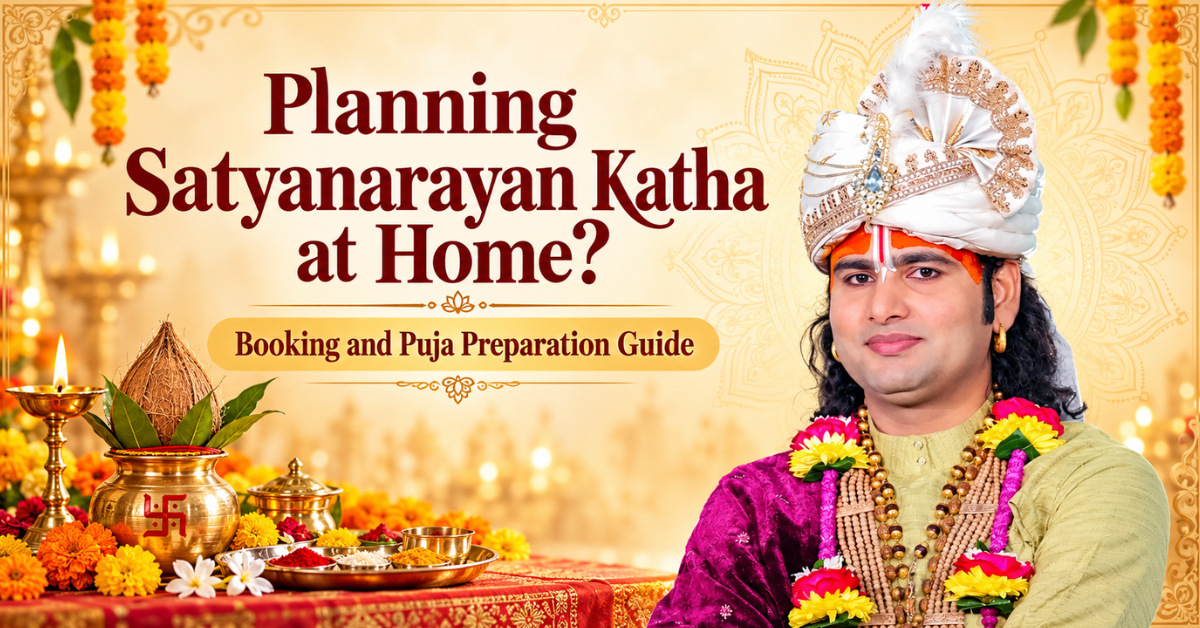
Preparation is a part of the worship itself. Begin by cleaning the house, especially the area where the puja will take place. Place a low platform with a yellow cloth, and set up the picture or murti of Lord Satyanarayan with flowers and a lamp. Keep the kalash, fruits, tulsi leaves and prasad ingredients ready, and make sure that seating is comfortable for elders and children.
It also helps to inform guests of the starting time, since the katha should begin and end at the planned hour. Request everyone to switch off their phones, and ask the family to sit together during the katha. The simple act of listening as a family is, in itself, a form of devotion.
The Katha Experience: What Happens on the Day
On the day of the puja, the vachak arrives, checks the arrangements and begins with a short prayer. The host takes the sankalp, and the usual worship of Ganesh ji, the kalash and the main deity follows. After this, the katha is narrated chapter by chapter. A good vachak pauses at suitable moments to explain a story or to connect it with daily life.
When the final chapter ends, the family performs the aarti, offers the prasad and bows before the Lord. The prasad is then distributed to everyone, and most families serve a simple meal. It is a warm and joyful end to an hour of quiet listening.
Satyanarayan Katha Vachak and the Wider Katha Tradition
Many families who invite a vachak for the Satyanarayan puja later explore other katha forms. Some listen to the Ramayana through a Ram katha vachak , while others organise a Hanuman katha for strength and protection. These traditions are different in story and style, yet they share the same purpose of drawing the household closer to dharma and to one another. If you would like to read more about the basics of the vrat before you invite a speaker, our article on Satyanarayan katha explains the meaning, the stories and the puja vidhi in detail.
Common Mistakes to Avoid
Families sometimes face avoidable problems. Booking at the last minute leaves little time for planning. Failing to confirm the language or the duration can lead to confusion. Over-crowding the space makes it hard for guests to listen. Treating the event as a social function rather than a worship leaves little room for reflection. Finally, forgetting to share the prasad with everyone present goes against the spirit of the vrat. A little planning and humility solve all of these.
Conclusion
A Satyanarayan katha vachak is much more than a speaker. He is a guide who helps the family connect with truth, gratitude and devotion in the middle of busy lives. When you choose a vachak with knowledge, warmth and discipline, and prepare your home with care, the ceremony becomes a memory that the whole family cherishes.
To learn more about arranging a katha, visit the Satyanarayan katha vachak page and connect with the team. May Lord Satyanarayan bless your family with truth, peace and abundance.
Share this post:
Continue Your Spiritual Journey
Explore related kathas and pujas for devotion, family occasions, and deeper spiritual practice.
Table of Contents
- Satyanarayan Katha Vachak: What to Expect and How to Choose the Right One for Your Family
- What Does a Satyanarayan Katha Vachak Do?
- Why the Choice of Vachak Matters
- Qualities to Look for in a Satyanarayan Katha Vachak
- Questions to Ask Before You Book
- Preparing Your Home for the Katha
- The Katha Experience: What Happens on the Day
- Satyanarayan Katha Vachak and the Wider Katha Tradition
- Common Mistakes to Avoid
- Conclusion