

Katha Vachak for Indian Families in Canada and Australia: Bhagwat, Hanuman, Ram and Satyanarayan Katha Explained
"Katha vachak" sounds like a single profession. It is not. The four kathas most commonly hosted by Indian families in Canada and Australia — in Toronto, Brampton and Vancouver as much as Sydney, Melbourne and Brisbane — each draw on a different scripture, run to a different length, follow a different ritual sequence, and demand a different kind of expertise from the person narrating them.
Understanding those differences is the most useful thing you can do before booking, particularly when your venue, sangat and the vachak's own travel schedule all need to line up months in advance. This guide explains what each katha involves and what genuine expertise looks like in each.
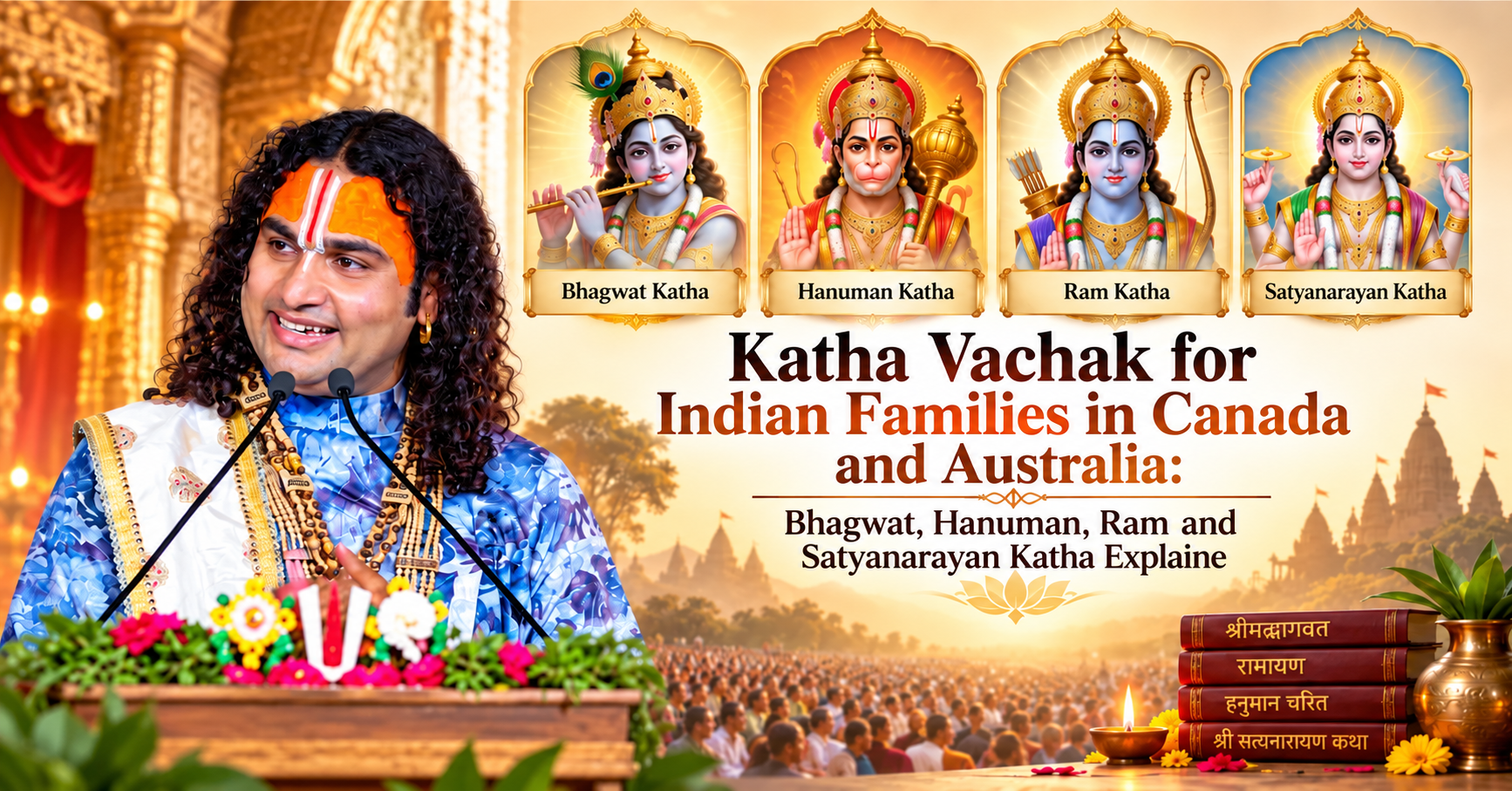
The Four Kathas at a Glance
Bhagwat Katha — the Shrimad Bhagavata Purana, twelve skandhas, traditionally narrated over seven days as a Bhagwat Saptah. The most demanding of the four.
Ram Katha — the Ramcharitmanas and Valmiki Ramayana, seven kands, usually over seven or nine days.
Hanuman Katha — the life and leelas of Shri Hanuman Ji, almost always with a Sundarkand path, most often as a single session.
Satyanarayan Katha — five adhyayas from the Skanda Purana with a full puja, completed in a single two-to-three hour sitting at home.
What Each Demands of a Vachak
Bhagwat Katha
The hardest to narrate well. Twelve skandhas across seven days, with a fixed daily sequence from Parikshit Maharaj through Krishna janm, Govardhan leela, Rukmini vivah and Sudama charitra to the closing havan.
A qualified Bhagwat Katha vachak can tell you which skandha any prasang belongs to, narrates in sequence rather than opening with the popular episodes, and performs the full vidhi including kalash yatra and purnahuti. Watch for the most common shortcut: front-loading Krishna janm and Maharaas because they draw the biggest response, then filling the remaining days loosely.
Ram Katha
Different demand entirely. Here the test is whether the vachak recites the chaupais accurately from memory and explains what the lines actually say — and whether he narrates the difficult passages.
Kaikeyi's boon, Bharat's refusal of the throne, the Uttar Kand: these are where a Ram Katha vachak either teaches something or skips past to keep the mood comfortable. The uncomfortable sections are the ones that matter, because Ram Katha is fundamentally a teaching on conduct under pressure.
Hanuman Katha
The particular skill here is leading rather than only addressing. A Hanuman Katha lives on collective recitation — the Sundarkand path and the Hanuman Chalisa sung by the whole hall, not performed at it.
A good Hanuman Katha vachak carries the sangat into that recitation, and covers the full narrative from the janm katha onward rather than jumping to Lanka dahan because it is dramatic.
Satyanarayan Katha
Looks the simplest, which is exactly why it is most often performed carelessly. The full vidhi runs sankalp, Ganesh puja, navagraha puja, kalash sthapana, sthapana of Bhagwan Satyanarayan, then the katha.
A Satyanarayan Katha vachak who begins directly with the stories has skipped the puja. Equally, all five adhyayas must be recited — shortening to two or three defeats the purpose, since the fourth and fifth carry the central teaching about honouring a promise and never treating prasad lightly.
What Genuine Expertise Looks Like Across All Four
Whichever katha you are booking, these markers hold, wherever in the world it is hosted:
- Guru parampara. A trained vachak studied under a teacher in a recognised lineage and will name it if asked.
- Specific answers. Ask which skandha, which kand, which adhyaya. Precision indicates study; vagueness indicates a memorised repertoire.
- Full vidhi performed. Puja is part of katha, not an optional extra. Establish whether the vachak's team performs it or whether you need to arrange a separate pandit locally.
- Sequence respected. No skipping to the crowd-pleasing episodes.
- Bhav over performance. Watch a full recorded session, not a highlights clip, and judge what it leaves behind.
- Consistency off the vyas peeth. What does the vachak do when he is not narrating? Ongoing gaushala, annakshetra, gurukul or old age home work is verifiable evidence rather than a claim. Pujya Shri Aniruddhacharya Ji Maharaj conducts all four of these kathas alongside the ongoing seva work at Shri Gauri Gopal Ashram in Vrindavan.
- Availability for the full duration. Confirm the same vachak narrates every day, with travel dates that cover the entire programme and leave no risk of an early departure.
What's Different When You're Hosting in Canada or Australia
A handful of practical realities separate booking a katha here from booking one in India, and worth planning around from day one:
- Travel comes first. Most senior vachaks are based in India, so your programme dates are really set by his visa processing and flight availability, not just the hall's calendar. Confirm both before you announce a date, and build in a day or two after arrival before a multi-day katha begins.
- Venue depends on scale. A Satyanarayan Katha or Hanuman Katha usually fits into a home or a small mandir hall. A Ram Katha or Bhagwat Saptah needs a temple, gurudwara or community banquet hall — in cities like Toronto, Brampton, Mississauga, Vancouver and Calgary, or Sydney, Melbourne, Brisbane and Perth, local Hindu associations and temple committees are usually the fastest route to both a venue and a ready sangat.
- Samagri needs a plan. Confirm with the vachak's team whether puja samagri is sourced locally through Indian grocery stores in your city, or whether particular items travel with the team from India — this changes how early your prep needs to start.
- The schedule bends around work and school. Multi-day kathas here are usually built around evenings and weekends rather than weekday afternoons, so confirm the daily timing works for your sangat's routine before you commit a venue.
- Lead time is longer. Visa processing and international flights mean you should book further ahead than families do in India — see the timelines below.
Matching the Katha to Your Occasion
Griha pravesh, a new business, a family milestone, thanksgiving → Satyanarayan Katha at home, a single afternoon.
An obstacle, an illness, exams, a legal matter, a Tuesday sankalp → Hanuman Katha with Sundarkand path, a single evening.
Ram Navami, Vivah Panchami, Diwali, a community programme, a barsi → Ram Katha, three to nine days.
Janmashtami, a major family observance, a full community mahotsav → Bhagwat Saptah, seven days.
Be honest about your volunteer capacity before choosing. A short katha hosted well serves a family far better than a long one hosted thinly.
What Each Katha Asks of the Host Family
The four also differ in what they demand from you, and this is worth weighing before you choose.
A Satyanarayan Katha needs a clean room, a chowki, the samagri and a single free afternoon. The family keeps a fast until the prasad is taken. That is the whole commitment.
A Hanuman Katha needs slightly more — a Hanuman Ji murti with a fresh chola, red cloth for the aasan, Sundarkand pothis or printed Chalisa copies for the sangat, and prasad for everyone attending. Still manageable within one evening.
A Ram Katha or Bhagwat Katha changes the scale entirely. Now you need a venue, a stage with a vyas peeth, tested sound, a full samagri list, daily prasad, local travel and accommodation for the vachak and his team, and volunteers for registration, seating and cleanliness across every day of the programme.
The yajman family is also expected to take the sankalp on day one, keep a sattvic diet throughout, and attend every single session without exception.
None of this is a reason to choose the smaller katha. It is a reason to be honest about your volunteer strength before fixing a date.
What to Ask Before You Confirm
- Which lineage did you train in?
- What exactly will be covered in each session?
- Does your team perform the puja vidhi, or do we arrange a pandit separately?
- Can samagri be sourced locally, or should we arrange it ourselves?
- When will we receive the samagri list?
- What are the travel, visa and accommodation requirements?
- What should we budget for beyond dakshina?
- Can we speak to a family in Canada or Australia who hosted your katha previously?
Share this post:
Frequently Asked Questions
Continue Your Spiritual Journey
Explore Bhagwat, Hanuman, Ram and Satyanarayan Katha guides for families in India and abroad.
Table of Contents
- Katha Vachak for Indian Families in Canada and Australia: Bhagwat, Hanuman, Ram and Satyanarayan Katha Explained
- The Four Kathas at a Glance
- What Each Demands of a Vachak
- Bhagwat Katha
- Ram Katha
- Hanuman Katha
- Satyanarayan Katha
- What Genuine Expertise Looks Like Across All Four
- What's Different When You're Hosting in Canada or Australia
- Matching the Katha to Your Occasion
- What Each Katha Asks of the Host Family
- What to Ask Before You Confirm
.webp)

